
How Do You Become a Social Media Designer?

How Do You Become a Social Media Designer?
A conversation with James Junk

We've been seeing a lot more job postings for Graphic Designers who exclusively work in social media. It pays well and it's in high demand, but not many people are able to get it. Even if you're a seasoned graphic designer, you might be worried about the burnout of social media content or if you have the portfolio to get hired.
We sat down with James Junk, who leads design for ilovecreatives' own social channels and teaches our Social Design Course, to talk through how he actually built this career. James has designed for clients like Wired, the LA Clippers, Human Rights Campaign, Morphe, Apple TV+, and YouTube. Before that, he was a designer at Impact, a media brand with 2.4M+ followers, making high-volume content and brand partnerships for names like Beyond Meat, Strava, and Hinge. Along the way he's picked up a Webby, a Shorty Impact Award, and recognition from D&AD and Fast Company.
Here's what he had to say.
How he actually got here
James didn't start out with a plan to design for brands like Wired or the Clippers. It started with just making work and putting it online.
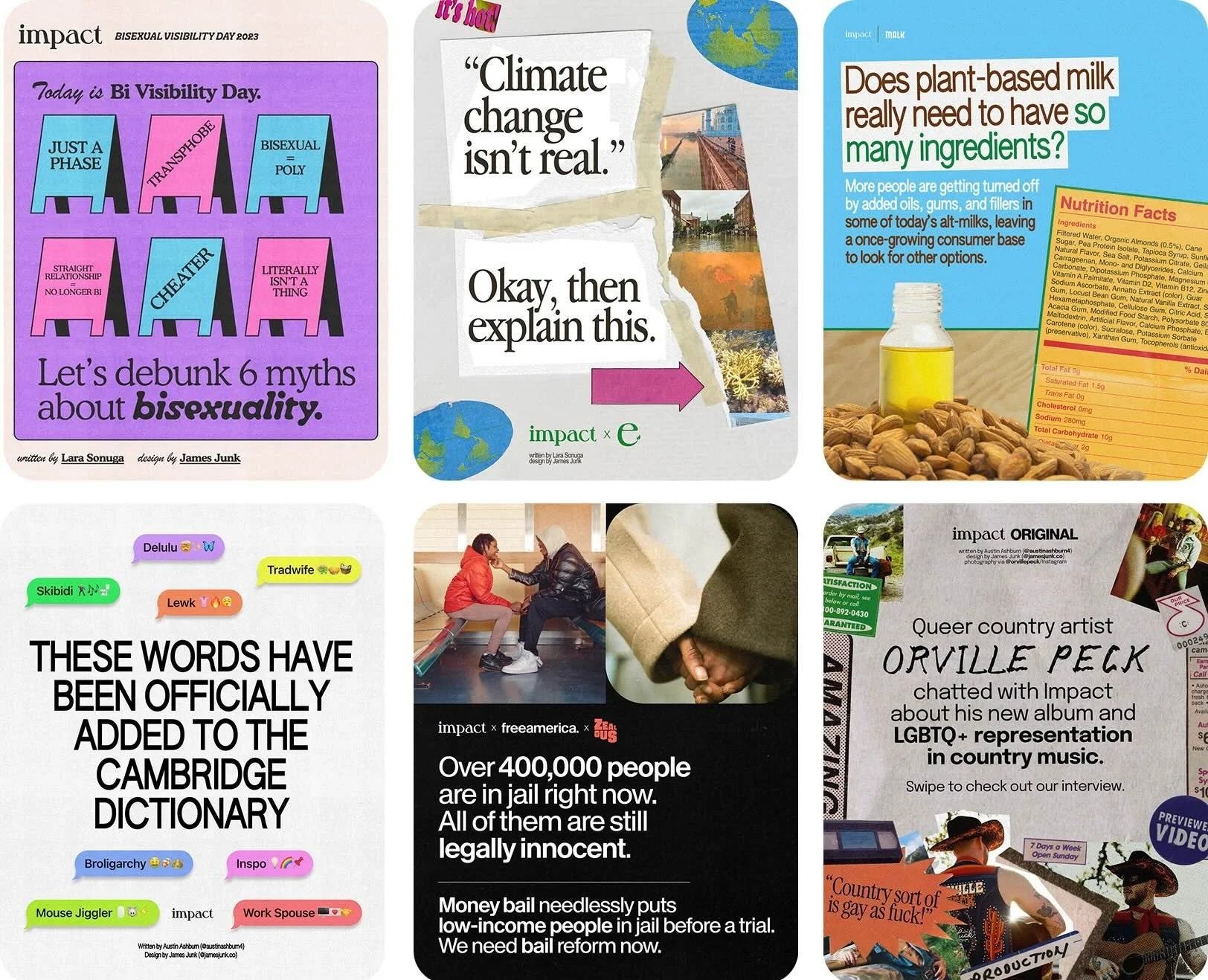
While still in school, he landed his first real design job at Impact, a high-volume digital media brand, where a huge amount of the work was social.
"I probably didn't realize it at the time, but that was where I was getting this insane number of reps in what we'd now call social design."
The specialization grew from there. Freelance clients kept asking for a social component on top of campaigns and identity work, and it turned into ilovecreatives asking the same question in a bigger way: why isn't anyone teaching this as its own discipline?
What Impact taught him
Designing for an audience that size meant learning to work fast and getting instant feedback, for better or worse.
"Some days you'd know exactly what was coming. Other days something would happen at 10am and the post needed to be on Instagram at noon. I learned how to ask: what actually matters here? What does somebody need to understand immediately? You'd make something, post it, and then watch thousands of people either share it, save it, argue about it, laugh at it, or completely ignore it. Very humbling, but also such a good education."
What he'd do differently from his early freelance years
"CASE STUDIES!!! I wish I documented everything better. When I was starting out, I thought: nice final image = portfolio piece. So much of my old work is just “here is a cool graphic I made :)” with zero explanation of what happened before or after.
Now, especially when I’m looking at someone for a social media design role, I want to see how their brain works: What did you get asked to do? What did you notice about the brand? What ideas did you explore? Why did you choose this one? Okay, you made one great carousel, but what happens when I ask you for ten more pieces?”
His advice for anyone considering the specialty: don't wait for permission.
"The field is still young, which is actually exciting. If you want to be a social designer, my advice is start now. Make social work. Put it in your portfolio. Call yourself one. Nobody has to knight you first."
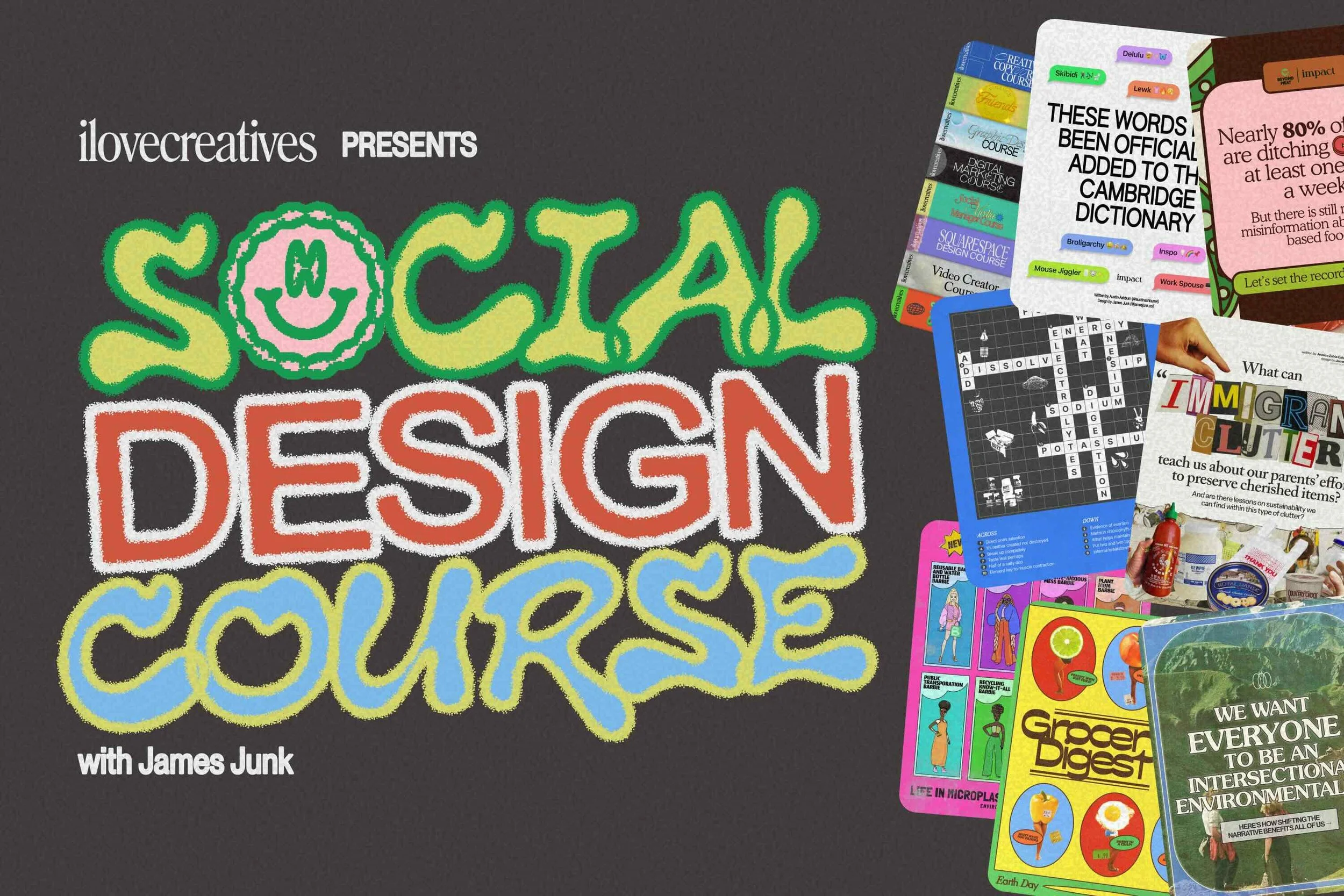
If you're figuring out how to specialize the way James did, that's the exact gap the Social Design Course is built to close.
What actually makes social content work
For James, the difference between content that just looks good and content that performs comes down to one thing: the idea.
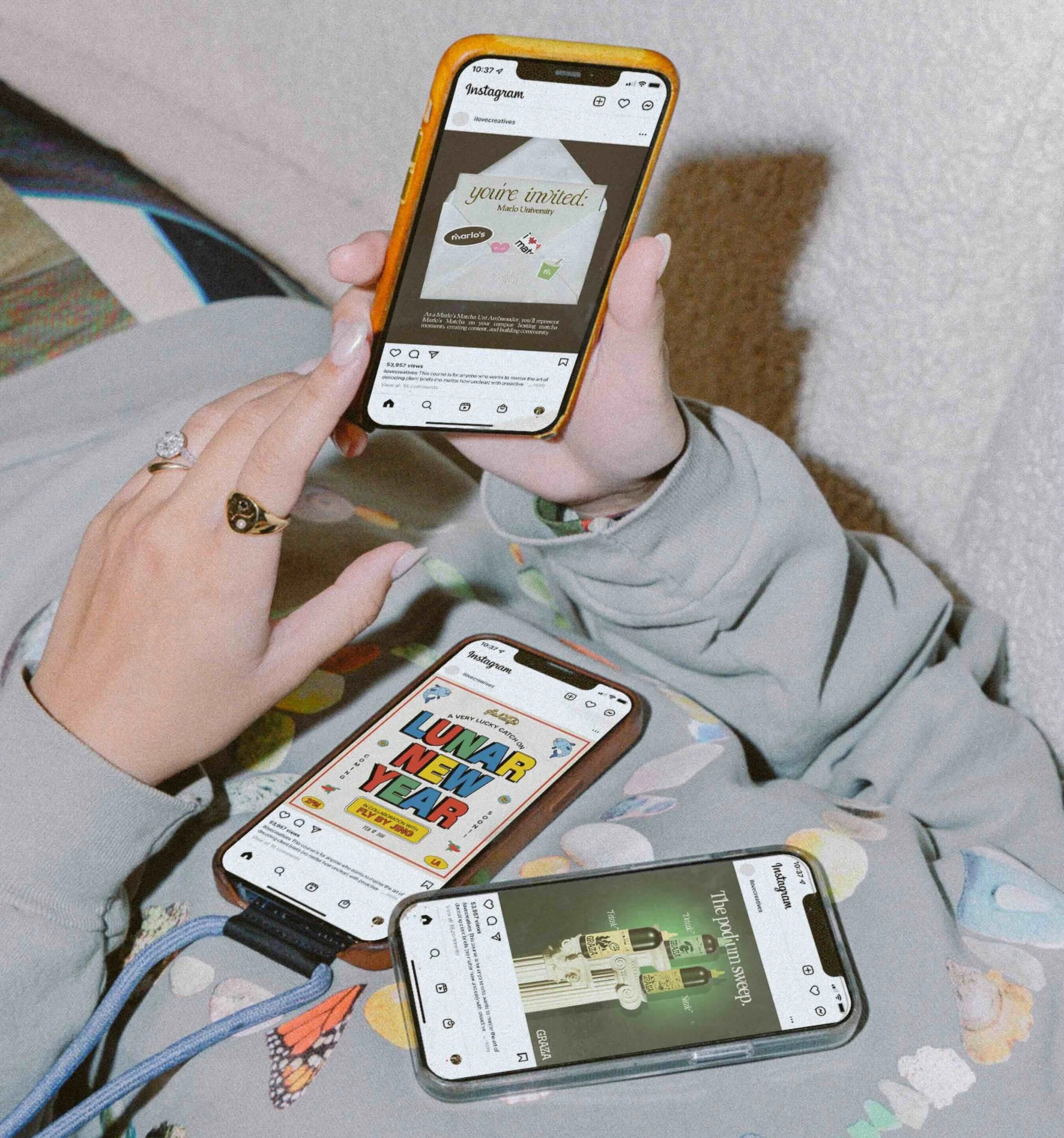
"Someone scrolling Instagram does not care that you spent three hours getting the kerning perfect. They're moving their thumb at like 900mph. You need to give them a reason to care. Is it a question? A joke? A piece of information they didn’t know? Or maybe the visual itself is so captivating that they have to stop and figure out what they’re looking at? Then, the design helps make that idea hit.”
His test for any post:
"Why would I stop for this? And why would I do anything after I stop? If I can't answer those, the design probably needs more than just a cool font."
The most common mistakes he sees
"I'll see a post with three headlines, a paragraph, five supporting messages, four logos, two CTAs, six type sizes. I'm always asking myself: what is the ONE thing someone needs to get from this? If there’s more to say, amazing. That's why God invented carousels. Another big one is treating social like the place where campaign leftovers go. You’ll have a campaign that was clearly designed for a billboard or website hero and then somebody goes, ‘Great! Can you make this social?’ and crops it to 4:5.”
On brand partnerships
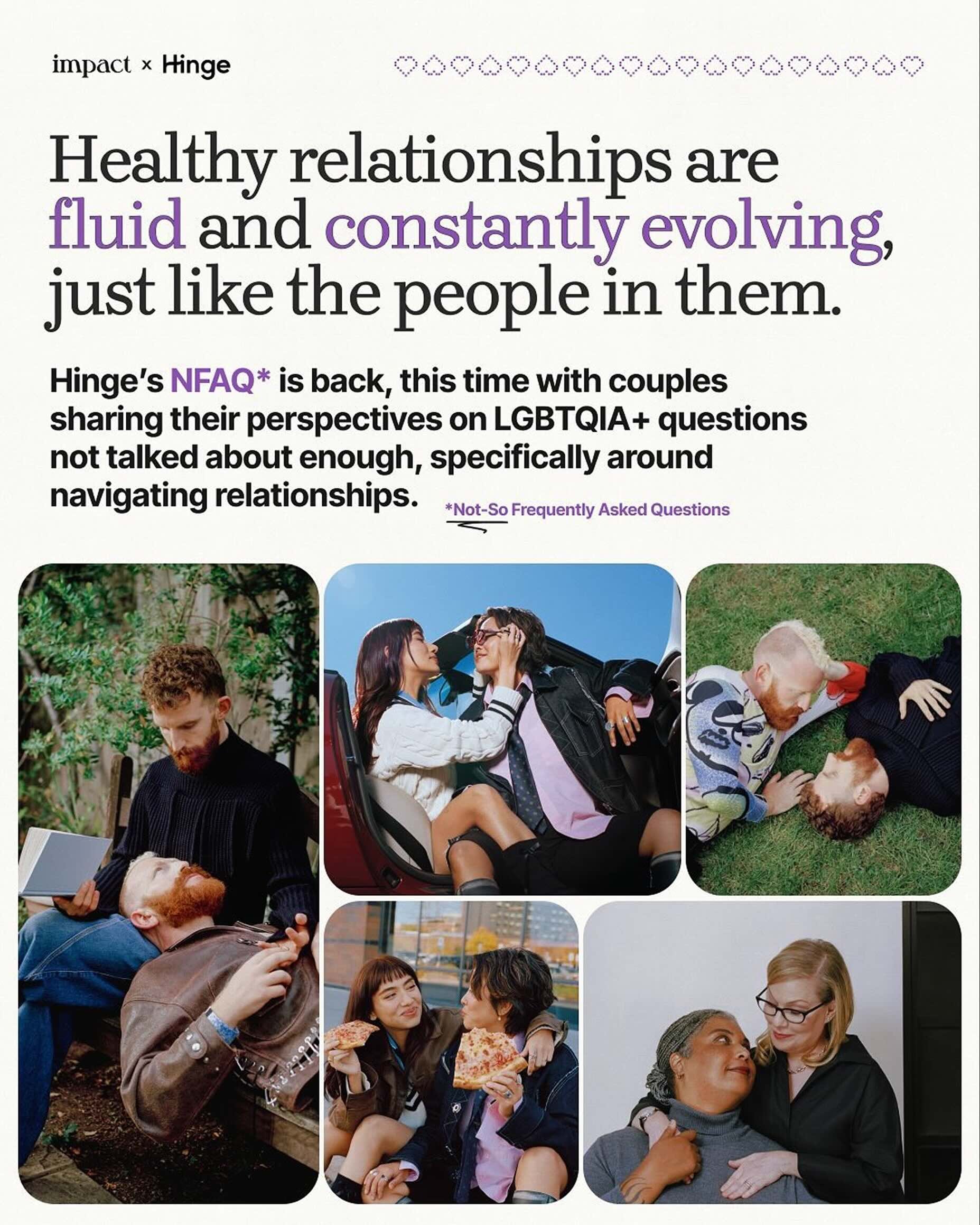
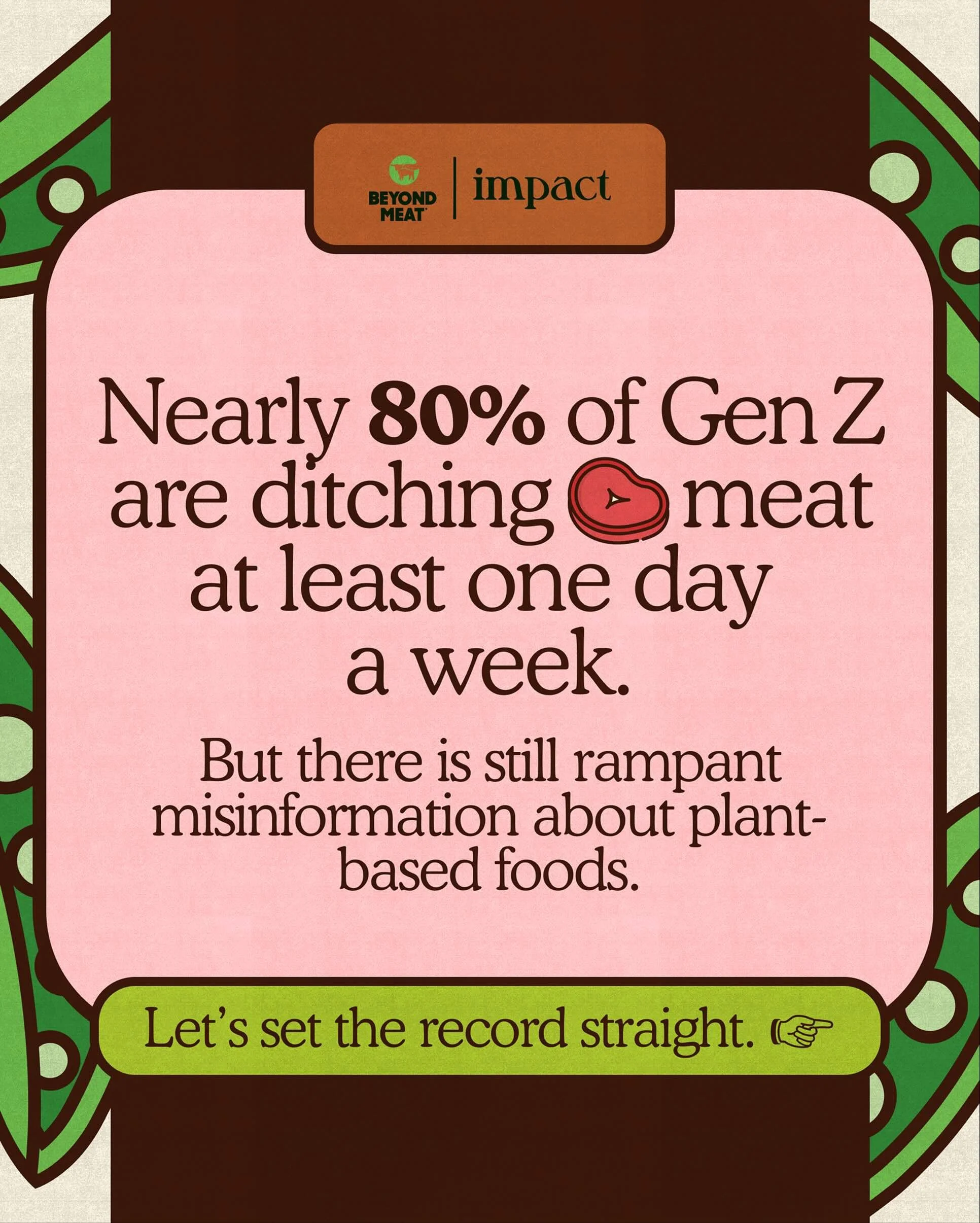
James has worked on co-branded content for Beyond Meat, Strava, and Hinge, where the risk is what he calls brand soup.
"Partnerships are a fun little design puzzle because suddenly you have TWO brands in the room! Both brands have their own colors, fonts, tone, audience, logo requirements. If you throw all of it together, you can end up with brand soup. I start by looking for the thing they have in common: why are these two brands collaborating in the first place? What can exist here that wouldn’t make sense for either brand alone? Partnership work taught me a ton about restraint. You might get handed 50 brand assets and think you need to represent all of them because everybody needs to be happy, but you don’t!"

His day-to-day workflow
Figma is home base, then he bounces into Illustrator, Photoshop, After Effects, Premiere, or Procreate depending on the idea.
"I’m honestly pretty tool-agnostic. I care way more about getting to the idea than whether using the “correct” software. My brain generally goes: Brief, research, idea, visual direction, toolkit, make a million things, panic slightly, refine, deliver. The professional term for 'make a million things' is versioning."
None of this comes from a template. It's a process James built lesson by lesson in the Social Design Course, which is exactly why students walk away with a system they can reuse on any brand, not just one nice-looking post.
Is this actually a viable career?
The honest answer: the work might live under different titles, but the demand is real.
"'Social designer' can mean someone on an in-house content team, a freelancer doing launch campaigns, a brand designer who specializes in digital. It's all over the place."
James's own path mixed the stability of an in-house role with freelance work that grew over time into bigger clients, campaigns, and eventually teaching.
"Almost every branding project eventually needs a social expression. Every campaign needs social assets. If you're strong at design and you understand how brands behave on the internet, that combination can take you in a lot of directions."
He also pushes back on waiting for a job literally titled "Social Designer."
"If you find a Graphic Designer role where 70% of the job is making cool work for social, congrats, you are about to learn social design."
On burnout
"The burnout question is very real because social never stops. I've learned that systems make a massive difference. If the brand has a strong toolkit, you have a starting point. If the content strategy is clear, you have constraints. You can actually spend your energy intelligently."
That's the exact skill the Social Design Course is designed to teach: not just how to make one good post, but how to build a system so you're not reinventing the wheel every time.
What new designers get wrong, and what actually helps
"It can feel like you need experience in order to get experience. Don't wait for permission to make that work. Look at the kinds of problems their designers are solving and make your own version of that problem. Spec work absolutely counts when you're early in your career."
For designers pivoting from another industry, he says the instinct to feel like you're starting from zero is usually wrong.
"Your previous career probably gave you some combination of strategy, communication, writing, organization, presentation skills, industry knowledge, client management, cultural perspective. Bring that with you."
On what separates good designers from anyone using the same tools:
"Anyone can open Canva or Figma, use a template, generate an image, follow a trend. But the tool doesn't make the designer. The part that's harder to shortcut is knowing what to choose, what to remove, when to break a rule, and when the work is finished."
Where social design is headed
James thinks the discipline is going to get more expansive, not less, over the next several years.
"Social is becoming one of the main places people actually experience a brand, so the designer working on it is touching way more than posts: motion, video, memes, typography, campaigns, creator content, launches, maybe even interactive or real-time stuff."
On AI, a question on a lot of designers' minds right now:
"It would be naive to pretend AI won't affect design jobs. But I don't think 'AI can make graphics' means designers are no more. A huge part of being a good social media designer is judgment: knowing what's worth referencing, what feels culturally relevant, what idea is actually interesting enough to make in the first place. That's much harder to reduce to a prompt. Don't let AI scare you out of learning design. Learn the fundamentals. Develop your taste. I feel secure because I've built a career around much more than execution. I'm being hired for my perspective, my ideas, and my ability to solve creative problems."
Words of encouragement
James's advice for anyone who feels discouraged before they've even started:
"Please start before you feel ready. Your first projects are allowed to be awkward. Your first post is allowed to get 12 likes. Your portfolio is allowed to change completely six months from now. Try not to measure your beginning against somebody else's year ten."
Where the Social Design Course fits in
James built the course around the process he actually uses on the job, not a set of layouts to copy.
"I didn't want to make a course where I sit there and go, 'Here are five cool Instagram layouts, copy me.' It starts much earlier: what does the brief actually want from you? What are your concepts? Then we build the visual toolkit and stress-test it by making a lot of stuff, because that's where you find out if your idea is actually useful."
It's built to fill the gap between free tutorials and the actual job.
"You can learn Photoshop on YouTube. The thing I wanted to give people was the stuff between the tutorials. Someone hands you a social brief. Now what? That's the part I had to learn by actually doing the job over and over."
Students come from a range of backgrounds, not just design.
"A lot of the people who take the course are already working in social in a non-design capacity: content writers, social media managers, digital marketers, people on brand teams. Sometimes it's about becoming a Social Designer. Other times it's about becoming much more powerful in the role you already have."
By the end, students walk away with a full social design project they can turn into a portfolio case study, and the ability to explain the thinking behind it.
"Being able to explain your thinking is such a career unlock. It helps in interviews. It helps with clients. It helps you defend good ideas."
Next Steps?
Most of what James has learned came from years of reps, real briefs, and the willingness to make ten versions before one actually worked.
If you’re curious about where to start, the process James keeps describing — brief, research, toolkit, versioning, feedback — is exactly what our Social Design Course is built around. It’ll give you a solid foundation and a real place to start your social design journey.
This interview was originally conducted on Reddit. Read the full thread and community discussion here →


Learn how to navigate the creative process of ideation, video editing, and freelancing. Plus, get 1on1 feedback from Rachel and exclusive access to creative coaching content.
Start the Course Today